

Over thirty states in the United States currently uphold “Stand Your Ground” statutes. This massive number highlights how vital it is to recognize your rights during a conflict. Knowing these rules remains a key part of modern safety.
Navigating protection rules often feels like a maze. However, following clear self-defense laws provides a solid base for staying safe. Knowing your rights helps you remain collected under pressure.
Every state applies these rules differently. Learning about justified force ensures you act within the boundaries of the legal system. It empowers you to make quick, smart choices.
This guide explores the essentials of local protection. Gaining this knowledge is the first step toward true security. Let’s look at what every citizen should understand.
Key Takeaways
- Grasping state-specific rules is vital.
- Protection levels depend on specific threat levels.
- Some regions require a duty to retreat.
- Legal knowledge helps manage post-incident stress.
- Reasonable belief acts as a standard metric.
- Preparation ensures better decision-making during crises.
1. Understanding the Legal Foundation of Self-Defense
The concept of self-defense is deeply rooted in law, and comprehending its legal foundation is vital for individuals to exercise their rights effectively. Self-defense laws vary by jurisdiction, but there are common principles that guide the application of these laws.
What Constitutes Legal Self-Defense
Legal self-defense is generally defined as the use of reasonable force to protect oneself from an imminent threat of harm. The key elements include the presence of an immediate threat, the necessity of using force, and the proportionality of the response to the threat.
Reasonable force is a critical component, meaning the level of force used must be appropriate for the perceived threat. This does not necessarily mean that the force used must be identical to the threat, but it should be proportionate.
The Reasonable Person Standard
The reasonable person standard is a legal benchmark used to assess whether the actions taken in self-defense were justified. It asks whether a reasonable person, in the same circumstances, would have perceived the threat as imminent and responded similarly.
This standard is subjective and can vary significantly depending on the jurisdiction and specific circumstances of the case.
Imminent Threat Requirements
An imminent threat is a critical element for a valid self-defense claim. It refers to a threat that is immediate and unavoidable, leaving no reasonable opportunity for alternative actions such as retreat.
Defining Imminent vs Future Threats
Distinguishing between imminent and future threats is crucial. An imminent threat is one that is about to occur, whereas a future threat is anticipated but not immediate. Self-defense laws typically require the threat to be imminent.
Pre-emptive Action and Legal Risks
Taking pre-emptive action against a perceived future threat can be legally risky. While it may be justified in some cases, it often raises complex legal questions about the legitimacy of the perceived threat and whether the action was necessary.
Individuals considering pre-emptive action must carefully assess the situation and, if possible, seek legal counsel to understand the potential legal implications.
2. Key Elements of Justified Force in Self-Protection
The use of force in self-protection is a complex issue that involves several key elements. When individuals find themselves in situations where they must defend themselves, understanding these elements can be the difference between a justified action and a criminal offense.
Proportionality: Matching Force to Threat
One of the fundamental principles of justified force is proportionality. This means that the level of force used in self-defense should be proportional to the threat faced. Using excessive force against a minor threat can lead to legal repercussions. For instance, using lethal force against someone who is merely pushing you could be considered disproportionate.
Necessity: When Force Becomes Required
The necessity of using force is another critical factor. Force is considered necessary when it is the only means available to prevent imminent harm. If there are other reasonable alternatives, such as retreating or de-escalating the situation, these should be considered before resorting to force.
| Scenario | Force Used | Justification |
|---|---|---|
| Physical assault | Physical defense | Generally justified if proportional |
| Threat with a weapon | Lethal force | May be justified depending on the jurisdiction and perceived threat |
| Verbal threat without weapon | Lethal force | Typically not justified |
Perception vs Reality in Self-Defense Claims
The role of perception versus reality is significant in self-defense claims. The courts often consider whether the individual’s perception of the threat was reasonable, even if the threat was not real. This subjective assessment can greatly impact the justification of force used in self-defense.
Understanding these key elements—proportionality, necessity, and the impact of perception—is essential for individuals to navigate the complex legal landscape surrounding self-defense and justified force.
3. Understanding Castle Doctrine Laws
Understanding the legal protections afforded by the Castle Doctrine is crucial for homeowners and individuals who wish to defend themselves and their property. The Castle Doctrine is a legal principle that varies by jurisdiction but generally allows individuals to use force, including deadly force, to defend their homes against intruders without a duty to retreat.
What the Castle Doctrine Protects
The Castle Doctrine primarily protects individuals within their homes, or “castles,” from intruders. It is based on the idea that a person’s home is their safest refuge and that they should not be required to retreat from their own home when faced with an intruder. This doctrine is often associated with the concept of self-defense and is designed to protect not just the individual but also their family and property.
Your Legal Rights Within Your Home
Within your home, you have significant legal rights to defend yourself and your family. The specifics can vary by state, but generally, the Castle Doctrine presumes that an intruder poses a significant threat. This means that if someone unlawfully enters your home, you may be justified in using force to protect yourself and your loved ones. It’s essential to understand that the use of force must be reasonable and proportionate to the threat posed.
Extensions to Vehicles and Occupied Spaces
While the Castle Doctrine traditionally applies to homes, some jurisdictions extend these protections to other areas, such as vehicles or other occupied spaces. For instance, if you are in your vehicle and faced with a threat, you may be legally justified in defending yourself under the Castle Doctrine, depending on your state’s laws. Understanding these extensions is crucial for knowing your rights in various situations.
Workplace and Business Property Considerations
The application of the Castle Doctrine can also extend to workplace or business property in some jurisdictions. This can be more complex, as the laws regarding the use of force in commercial settings can vary significantly. Business owners should be aware of their state’s laws regarding self-defense in the workplace, as the rules can differ from those applying to personal residences. It’s also worth noting that employers may have additional responsibilities and considerations when it comes to ensuring a safe work environment.
By understanding the Castle Doctrine and its applications, individuals can better protect themselves and their properties, knowing their legal rights and responsibilities.
4. Stand Your Ground Law Explained
In the realm of self-defense, Stand Your Ground laws play a pivotal role in determining the legality of one’s actions. These laws, part of the broader justified force statutes, vary by state and have significant implications for individuals claiming self-defense.
Stand Your Ground vs Duty to Retreat
The primary distinction between Stand Your Ground and Duty to Retreat laws lies in the obligation to attempt to retreat before using force in self-defense. Stand Your Ground laws eliminate the duty to retreat in certain situations, allowing individuals to stand their ground and defend themselves without first attempting to flee.
In contrast, Duty to Retreat laws require individuals to attempt to safely retreat before using force. This fundamental difference can significantly impact the outcome of self-defense claims.
Which States Have Stand Your Ground Laws
Several states have enacted Stand Your Ground laws, but the specifics can vary widely. Some of the states with such laws include Florida, Texas, and Georgia. It’s essential to understand the specific provisions in your state.
| State | Stand Your Ground Law | Key Provisions |
|---|---|---|
| Florida | Yes | No duty to retreat in any place where one has a right to be |
| Texas | Yes | Applies to one’s home, vehicle, or other places where one has a right to be |
| Georgia | Yes | Extends to include the use of deadly force in certain circumstances |
Important Limitations and Exceptions
While Stand Your Ground laws provide significant protections, they are not without limitations and exceptions. Understanding these is crucial for applying the law correctly.
When Stand Your Ground Doesn’t Apply
Stand Your Ground laws typically do not apply in situations where the individual is engaged in unlawful activity or is the initial aggressor. Additionally, the law may not protect individuals who use excessive force or act with malice.
It’s critical to note that the specifics of these laws and their applications can vary, making it essential to consult with legal professionals in your jurisdiction.
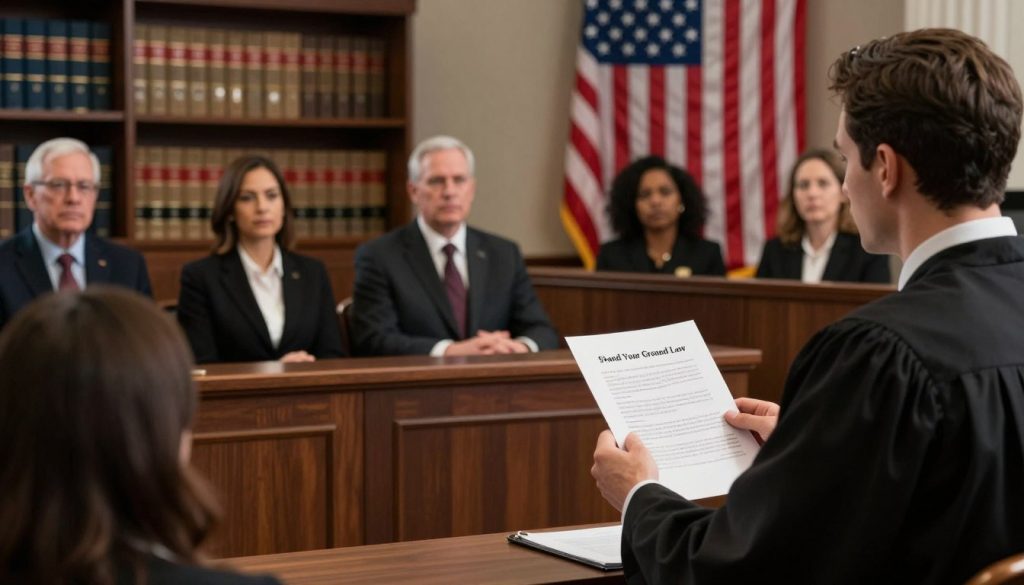
5. Navigating Lethal Force Regulations
Understanding the legal nuances of lethal force is crucial for individuals to protect themselves without inadvertently breaking the law. The regulations surrounding lethal force are complex and vary by jurisdiction, making it essential to comprehend the specific laws in your area.
When Lethal Force Is Legally Justified
Lethal force is generally considered justified when an individual reasonably believes it is necessary to prevent imminent death or serious bodily harm to themselves or others. This principle is rooted in the concept of self-defense and the right to protect one’s life and the lives of others.
The Standard for Deadly Threat
The standard for determining a deadly threat typically involves an assessment of whether the threat is imminent and whether the force used is proportionate to the threat posed.
Reasonable Fear of Death or Serious Bodily Harm
A key factor in justifying the use of lethal force is the presence of a reasonable fear of death or serious bodily harm. This fear must be based on objective criteria and not solely on the individual’s subjective perception.
Non-Lethal vs Lethal Response Options
When faced with a threat, individuals have various response options, ranging from non-lethal to lethal force. The choice between these options depends on the severity of the threat and the perceived level of danger.
- Non-Lethal Options: These include verbal de-escalation techniques, pepper spray, and stun guns, which can be effective in neutralizing a threat without causing permanent harm.
- Lethal Force: Reserved for situations where there is a significant and imminent threat to life or serious bodily harm, lethal force is a last resort that should be used with extreme caution.
Warning Shots and Brandishing: Legal Pitfalls
The use of warning shots or brandishing a weapon can have significant legal implications. While intended to deter a threat, these actions can escalate a situation or be misinterpreted, leading to legal repercussions.
“The decision to use force, whether lethal or non-lethal, should always be guided by the principle of proportionality and the legal standards in your jurisdiction.”
In conclusion, navigating lethal force regulations requires a thorough understanding of the legal framework governing its use. By being informed and cautious, individuals can better protect themselves and others while minimizing the risk of legal consequences.
6. Defense of Others Law: Protecting Third Parties
The laws surrounding defense of others are multifaceted, involving considerations of proportionality, necessity, and the relationship between the defender and the person being defended. When individuals intervene to protect others, they must navigate a complex legal landscape that varies by jurisdiction. Understanding these laws is crucial for making informed decisions in high-pressure situations.
Legal Standards for Defending Others
The legal standards for defending others generally mirror those for self-defense, emphasizing the use of reasonable force in response to an imminent threat.Reasonable forceis typically defined as the amount of force that a prudent person would deem necessary to protect the third party from harm. This standard requires an objective assessment of the situation, taking into account the perceived threat and the defender’s response.
In many jurisdictions, the defender is entitled to use force on behalf of another person if they reasonably believe that the third party is entitled to use self-defense. This principle is grounded in the idea that an individual should be able to protect others from harm, just as they would protect themselves.
Stranger vs Family Member: Does Relationship Matter
The relationship between the defender and the person being defended can influence the legal outcome of a defense of others claim. While some jurisdictions do not differentiate based on the relationship, others may consider it a factor in determining the reasonableness of the defender’s actions. For instance, a defender who is a family member might be viewed more sympathetically if they acted to protect a relative, due to the presumed closer relationship and potentially greater emotional investment in the well-being of the family member.
However, the law generally does not require a specific relationship between the defender and the third party for the defense of others to be valid. Strangers who intervene to protect others can also claim defense of others, provided they meet the necessary legal standards.
| Relationship | Legal Consideration | Potential Impact |
|---|---|---|
| Family Member | May be viewed more sympathetically | Positive impact on legal outcome |
| Stranger | Entitled to use force if reasonable | Neutral or case-dependent impact |
The Danger of Misidentifying Aggressor and Victim
One of the significant risks in defending others is the potential to misidentify the aggressor and the victim. If an individual intervenes on behalf of someone who is actually the aggressor, they may face legal consequences for their actions. This misidentification can lead to criminal charges or civil liability, highlighting the importance of carefully assessing the situation before taking action.
To mitigate this risk, defenders should attempt to de-escalate the situation if possible and use the minimum necessary force to protect the perceived victim. Additionally, being aware of the surroundings and understanding the context of the conflict can help in making a more accurate assessment of the situation.

7. Self-Defense and Justified Force Laws: Practical Steps to Stay Legal
To navigate the complex world of self-defense laws, it’s essential to know the practical steps that keep you legally protected. Understanding and applying these steps can significantly reduce the risk of legal repercussions when defending yourself or others.
Step 1: Research and Understand Your State’s Specific Laws
Self-defense laws are not uniform across the United States; they vary significantly from state to state. Therefore, the first step is to research and understand the specific laws in your jurisdiction.
Finding Reliable Legal Resources
To find accurate information, consult official state government websites, legal databases, or reputable law firms that specialize in self-defense laws. Reliable sources are crucial for understanding the nuances of your state’s laws.
Consulting with a Self-Defense Attorney
When in doubt, consulting with an attorney who specializes in self-defense laws can provide personalized guidance and clarity on your specific situation. They can help you understand how the law applies to your circumstances.
Step 2: Assess the Threat Level Before Taking Action
Assessing the threat level is critical before taking any self-defense action. This involves evaluating the situation to determine if there is a genuine threat.
Identifying True Threats vs Verbal Confrontations
Distinguishing between verbal confrontations and physical threats is vital. While verbal threats can be intimidating, they may not always justify physical self-defense. Understanding the difference is key to making the right decision.
Reading Body Language and Intent
Being able to read body language and understand the intent of the other party can help you assess the level of threat. Non-verbal cues can often provide critical information about someone’s intentions.
Step 3: Attempt De-escalation When Safely Possible
Whenever possible, attempting to de-escalate a confrontation is a recommended step before resorting to physical self-defense. De-escalation techniques can prevent the situation from becoming more violent.
Step 4: Use Only the Minimum Necessary Force
The principle of using only the minimum necessary force is fundamental in self-defense laws. Using excessive force can lead to legal consequences, even if you were initially justified in defending yourself.
Escalating Force Appropriately
Understanding when and how to escalate force appropriately is crucial. The goal is to neutralize the threat with the least amount of force necessary.
Step 5: Stop Immediately When the Threat Ends
Once the threat has been neutralized or has ended, it’s essential to stop any further defensive actions. Continuing to use force after the threat has passed can lead to legal issues.
Step 6: Call Law Enforcement and Report the Incident
After a self-defense incident, it’s crucial to call law enforcement and report what happened. Being cooperative and transparent with law enforcement can help clarify the circumstances surrounding the incident.
What to Say and What Not to Say
When reporting the incident, it’s essential to be factual and avoid making speculative statements. Sticking to the facts can help prevent misinterpretation of your actions.
Step 7: Preserve Evidence and Seek Legal Representation
Preserving any evidence related to the incident, such as witness statements or physical evidence, can be vital for your legal protection. Additionally, seeking legal representation early on can provide you with professional guidance throughout the legal process.
8. Conclusion
Navigating the complexities of self-defense and justified force laws can be challenging, but it’s crucial for making informed decisions in critical situations. Throughout this article, we’ve explored the legal foundations, key elements, and practical steps to stay within the bounds of these laws.
Self-defense laws and justified force statutes vary by state, making it essential to understand the specific regulations in your jurisdiction. By grasping the concepts of proportionality, necessity, and the reasonable person standard, you can better assess when force is justified.
As you’ve learned, laws such as the Castle Doctrine and Stand Your Ground provide additional context for when force can be legally used. By following the practical steps outlined, you can minimize risks and ensure you’re acting within the law if you ever find yourself in a self-defense situation.
Staying informed about self-defense laws and justified force statutes is key to protecting yourself and others while avoiding legal repercussions. By being aware of your rights and responsibilities, you can make more informed decisions in high-pressure situations.