

Did you know that over 40% of civil rights cases involving government misconduct are dismissed before a jury even looks at the evidence? This surprising reality stems from a rule that shields public officials from being sued unless they break “clearly established” laws. It often leaves citizens feeling powerless when they seek justice for clear violations of their rights.
This protection aims to help officials perform their duties without the constant fear of personal lawsuits. However, many people believe it has gone too far, creating a nearly impossible barrier for victims. Constitutional law arguments often focus on whether the Bill of Rights still protects everyone equally under these strict standards.
The qualified immunity legal debates continue to shape our courtrooms and impact how we view police accountability today. These discussions explore how we can hold people responsible while still allowing them to serve the public effectively. It is a vital conversation about the future of fairness and the role of our government in American life.
Key Takeaways
- Understanding the specific protections offered to various public employees.
- Learning why many civil rights cases get dismissed early in the process.
- Exploring the significant impact on individual rights and access to justice.
- Identifying why national reform has become such a popular topic.
- Examining the delicate balance between official duty and personal accountability.
- Discovering how recent court rulings affect modern American law and safety.
Understanding the Basics: What Qualified Immunity Means for You
At the heart of many police misconduct lawsuits lies the doctrine of qualified immunity, a legal principle that shields officials from certain claims. To comprehend the nuances of qualified immunity legal debates, it’s crucial to start with the fundamentals.
Defining Qualified Immunity in Plain Language
Qualified immunity is a legal doctrine that protects government officials, including police officers, from lawsuits alleging that they violated an individual’s rights, unless their actions were clearly established as being against the law at the time they occurred. This doctrine is intended to balance the need to protect officials from frivolous lawsuits with the need to allow legitimate claims of rights violations to proceed.
In simpler terms, qualified immunity means that an official can only be held liable if their actions were not only unconstitutional but also clearly recognized as such by existing law. This doctrine has been a cornerstone in many police misconduct lawsuits, often determining whether a case can proceed to trial.
The Historical Context Behind This Legal Doctrine
The concept of qualified immunity has its roots in the Supreme Court’s interpretation of the Civil Rights Act of 1871. Over time, the doctrine has evolved through various court decisions, shaping its current form and application. Understanding this historical context is vital to grasping why qualified immunity remains a contentious issue.
The evolution of qualified immunity reflects changing societal attitudes towards government accountability and individual rights. As the legal landscape has shifted, so too has the application of this doctrine.
Who Is Protected and Under What Circumstances
Qualified immunity protects government officials performing discretionary functions from liability for civil damages unless their conduct violates clearly established statutory or constitutional rights. This protection applies to a wide range of officials, including law enforcement officers, government administrators, and other public servants.
The key factor in determining whether qualified immunity applies is whether the official’s actions were reasonable in light of the legal landscape at the time. This assessment is often complex and subject to interpretation.
| Category | Description | Implication |
|---|---|---|
| Protected Officials | Government officials, including police officers and administrators | Liability protection for actions taken in the course of duty |
| Circumstances for Protection | Discretionary functions that do not violate clearly established rights | Officials are shielded from civil damages unless their actions were clearly unlawful |
| Legal Basis | Rooted in the interpretation of the Civil Rights Act of 1871 and subsequent court decisions | Evolution of the doctrine reflects changing legal and societal norms |
Breaking Down the Qualified Immunity Legal Debates
At the heart of the qualified immunity discussion lies a complex interplay of legal doctrines and constitutional principles. This doctrine, which shields government officials from civil lawsuits under certain conditions, has been a focal point of legal contention.
The debates surrounding qualified immunity are not merely academic; they have real-world implications for how we understand accountability and the limits of governmental power. As such, understanding the perspectives of both supporters and critics is crucial.
Why Supporters Defend Qualified Immunity
Supporters argue that qualified immunity is essential for protecting government officials from the fear of lawsuits, which could otherwise hinder their ability to make decisions and perform their duties effectively. They contend that without this protection, officials might be deterred from taking necessary actions, fearing legal repercussions.
A key argument in favor of qualified immunity is that it strikes a balance between holding officials accountable and allowing them to carry out their duties without undue fear of litigation. This balance, proponents argue, is crucial for the effective functioning of government.
Why Critics Call for Its Elimination
Critics, on the other hand, argue that qualified immunity has evolved into a nearly insurmountable barrier for individuals seeking redress for violations of their constitutional rights. They contend that it often leaves victims without recourse, undermining the principle of accountability.
The elimination of qualified immunity is advocated by many as a means to ensure that government officials are held to a higher standard of conduct. Critics argue that without it, there would be greater accountability and a more just application of the law.
The Constitutional Law Debates at the Center
The constitutional law debates surrounding qualified immunity are particularly contentious. At issue is whether the doctrine properly interprets the Constitution’s provisions regarding governmental immunity and individual rights.
| Aspect | Supporters’ View | Critics’ View |
|---|---|---|
| Constitutional Basis | Argue it is grounded in constitutional law and necessary for governmental functioning. | Contend it misinterprets constitutional provisions and undermines individual rights. |
| Accountability | Believe it balances accountability with the need for officials to act decisively. | See it as a barrier to accountability and justice for victims of rights violations. |
| Legal Precedent | Point to Supreme Court rulings as establishing its legitimacy. | Argue these rulings have been misinterpreted or misapplied. |

The table above summarizes the core differences between supporters and critics of qualified immunity, highlighting the constitutional law debates at the center of the issue.
How to Understand Supreme Court Rulings on Qualified Immunity
Deciphering the Supreme Court’s decisions on qualified immunity requires a deep dive into the legal precedents and the two-pronged test applied by the courts. The complexity of these rulings can often make it challenging for individuals to grasp the full implications of this legal doctrine.
The Two-Pronged Test Courts Must Apply
The Supreme Court has established a two-pronged test to determine the applicability of qualified immunity in civil rights cases. This test is crucial in understanding how lower courts evaluate these cases.
Determining if a Constitutional Right Was Violated
The first prong of the test involves determining whether a constitutional right was violated. This requires an examination of the facts of the case and the relevant constitutional provisions.
Establishing if the Right Was “Clearly Established”
The second prong assesses whether the constitutional right in question was “clearly established” at the time of the incident. This involves analyzing prior court decisions to ascertain if there was a clear legal precedent.
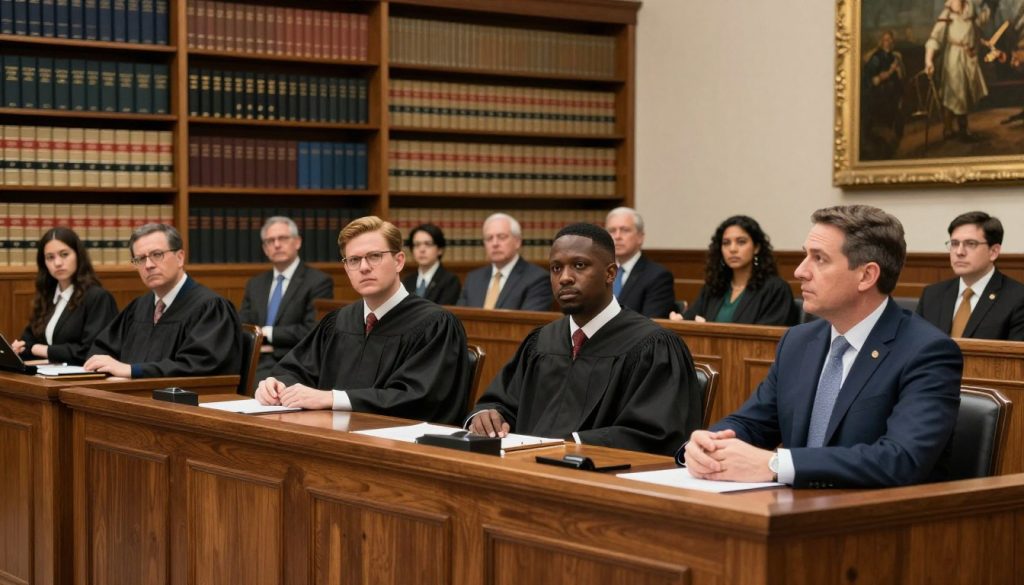
Key Supreme Court Rulings That Shaped the Doctrine
Several landmark Supreme Court cases have significantly influenced the doctrine of qualified immunity. Understanding these rulings is essential for a comprehensive grasp of the subject.
- Harlow v. Fitzgerald: Established the modern doctrine of qualified immunity, emphasizing the importance of “clearly established” rights.
- Pearson v. Callahan: Allowed courts to decide which prong of the qualified immunity test to address first, providing flexibility in the application of the doctrine.
Conducting Your Own Legal Precedent Analysis
To conduct a legal precedent analysis related to qualified immunity, one must carefully review relevant Supreme Court decisions and lower court rulings. This involves identifying patterns and inconsistencies in how courts apply the doctrine.
By understanding the intricacies of the two-pronged test and significant Supreme Court rulings, individuals can better navigate the complex landscape of qualified immunity.
Examining the Impact on Police Misconduct Lawsuits and Civil Rights Violations
The impact of qualified immunity on cases related to police misconduct and civil rights violations is multifaceted and warrants a closer look. As the legal landscape continues to evolve, understanding the nuances of how qualified immunity affects these cases is crucial.
How Qualified Immunity Blocks Excessive Force Cases
Qualified immunity often shields law enforcement officers from liability in cases alleging excessive force, making it challenging for victims to seek justice. Courts apply a two-pronged test to determine whether an officer is entitled to qualified immunity, which can be a significant hurdle for plaintiffs.
“The Supreme Court has emphasized that ‘clearly established law’ is a high bar, and it’s not enough for a plaintiff to show that their rights were violated; they must also show that the officer’s actions were objectively unreasonable in light of clearly established law at the time of the incident,” as noted in a relevant court decision.
The Barriers Victims Face When Seeking Accountability
Victims of police misconduct face significant barriers when seeking accountability due to qualified immunity. The doctrine can make it difficult for plaintiffs to overcome the hurdle of showing that the officer’s actions were not only unconstitutional but also contrary to clearly established law.
This can lead to a lack of accountability and a sense of injustice among victims and their families. As Justice Sonia Sotomayor once noted, “Qualified immunity has become a absolute shield for law enforcement officers.”
Notable Cases Where Qualified Immunity Prevented Justice
There have been several notable cases where qualified immunity has prevented justice for victims of police misconduct. For instance, in cases involving excessive force, courts have often ruled in favor of the officers, citing qualified immunity.
- A case in which an individual was subjected to excessive force during an arrest, and the court ruled that the officers were entitled to qualified immunity.
- Another case where a person was fatally shot by police, and the court again applied qualified immunity, shielding the officers from liability.
The Broader Effect on Civil Rights Protections
The application of qualified immunity in police misconduct cases has broader implications for civil rights protections. By making it more difficult for individuals to seek redress for violations of their rights, qualified immunity can erode trust in the justice system and undermine the protections afforded by civil rights laws.
“The doctrine of qualified immunity has been criticized for its potential to insulate government officials from accountability for their actions, thereby undermining the very purpose of § 1983.”
In conclusion, the impact of qualified immunity on police misconduct lawsuits and civil rights violations is significant. It is essential to continue examining and debating the doctrine to ensure that justice is served and civil rights are protected.
Evaluating Police Accountability Reform and Qualified Immunity Reform Proposals
Reforming qualified immunity is a critical step towards enhancing police accountability. The ongoing debates and discussions around this legal doctrine have significant implications for how law enforcement agencies operate and how civil rights are protected.
The call for reform is driven by the need to ensure that law enforcement officers are held accountable for their actions, particularly in cases involving alleged misconduct or civil rights violations. Various stakeholders, including lawmakers, civil rights organizations, and community leaders, are exploring different approaches to reform or potentially eliminate qualified immunity.
Congressional Efforts to Reform or Eliminate Qualified Immunity
Congress has been a key arena for debates on qualified immunity reform. Several bills have been proposed to either reform or completely eliminate the doctrine. For instance, the George Floyd Justice in Policing Act is one such legislative effort aimed at addressing police misconduct and reforming qualified immunity.
These efforts reflect a broader recognition of the need to balance the protection of law enforcement officers with the need to hold them accountable for misconduct. The proposed reforms vary in their approach, with some focusing on adjusting the standards for qualified immunity and others advocating for its complete abolition.
State-Level Actions and Alternative Approaches
In addition to federal efforts, various states have taken their own initiatives to address qualified immunity. Some states have enacted laws that limit or eliminate qualified immunity for law enforcement officers. For example, Colorado passed a law in 2020 that allows police officers to be sued for damages in state court for violating an individual’s civil rights, effectively limiting the application of qualified immunity.
Other states are exploring alternative accountability mechanisms, such as civilian review boards and independent review processes, to enhance transparency and accountability within law enforcement agencies.
How Other Accountability Mechanisms Could Work
Beyond reforming qualified immunity, other mechanisms can enhance police accountability. One approach is the use of body-worn cameras by police officers, which can provide critical evidence in cases of alleged misconduct.
Another mechanism is the implementation of de-escalation training for law enforcement officers. This training aims to equip officers with the skills necessary to resolve situations without resorting to force, thereby reducing the likelihood of civil rights violations.
What Reformed Police Accountability Might Look Like
A reformed system of police accountability could involve a combination of legislative reforms, policy changes within law enforcement agencies, and community-led initiatives. The goal is to create a system that is transparent, accountable, and just.
| Reform Element | Description | Potential Impact |
|---|---|---|
| Legislative Reforms | Changes to laws governing qualified immunity and police conduct | Enhanced accountability for law enforcement officers |
| Policy Changes | Updates to law enforcement agency policies on use of force and de-escalation | Reduced instances of police misconduct |
| Community Initiatives | Community-led programs for police oversight and engagement | Improved trust between law enforcement and the community |
Ultimately, the path forward will require a collaborative effort from lawmakers, law enforcement agencies, and the communities they serve. By exploring a range of reform proposals and accountability mechanisms, it is possible to create a more just and equitable system for all.
Conclusion
The ongoing qualified immunity legal debates highlight the complexities and challenges in balancing individual rights with the need to protect public officials from frivolous lawsuits. As discussed, qualified immunity is a doctrine that has evolved significantly over time, influencing how courts handle cases involving alleged civil rights violations by government officials.
Understanding the nuances of qualified immunity is crucial for grasping its implications on police misconduct lawsuits and broader civil rights protections. The doctrine’s application has been a point of contention, with some arguing it shields officials from accountability, while others see it as a necessary protection against unwarranted legal actions.
Reform efforts, both at the congressional and state levels, aim to address concerns around qualified immunity. Alternative approaches to police accountability are being explored, underscoring the need for a balanced approach that protects both individual rights and the interests of public servants. As the qualified immunity legal debates continue, it is essential to stay informed about the evolving landscape of civil rights law and its impact on society.